


She Travels Safe
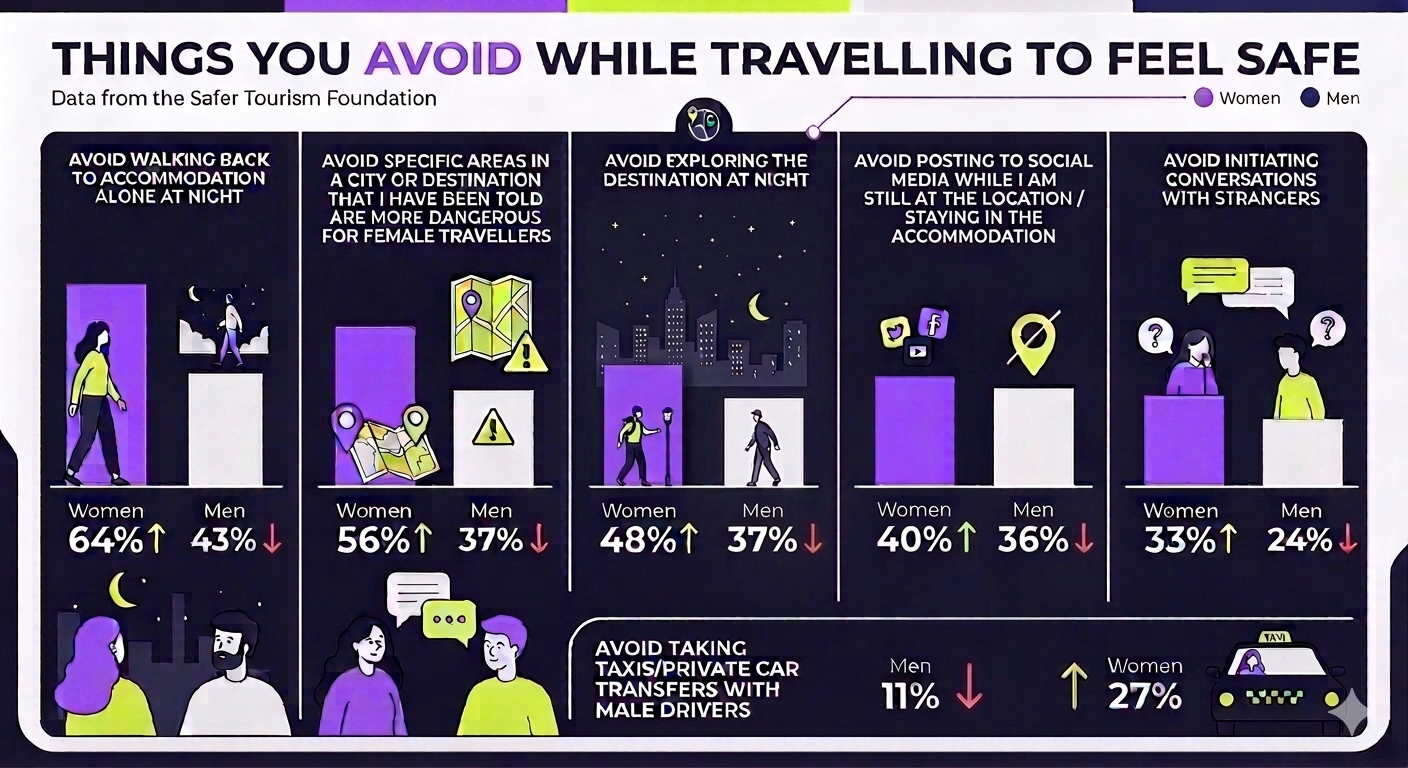
Everyone deserves to travel. But for some of us, travel feels different. Less than half of women feel confident travelling solo or with other women. Three in four women avoid walking back to their accommodation alone at night, compared to just 43% of men. Women aren't less adventurous. They're navigating different risks.
Our research reveals the gap between women's and men's travel experiences, and shows what must change. Knowledge is power. This campaign equips you with research-backed safety guidance, giving you practical tools to travel confidently and freely, whether you're planning your first trip or your 50th.
Risks, acknowledged. Responsibility, shared.
Adventure, encouraged.
This campaign is all about…
Telling the story behind the stats. What travellers have told us and what the data shows us.
Building a community and learning from each other’s experience.
Providing intervention tools to help anyone be an ally if someone’s in trouble.
Recognising the travel providers who encourage reporting, and take action to keep women safe.
The Safety Gap
The reality
Less than half of women feel confident travelling solo or with other women. Two in three say safety plays a big role in choosing their destination, and nearly two-thirds prioritise safety when choosing accommodation. These numbers tell us something important: women aren't avoiding travel, but they are planning it differently.
Research from Stand Up reveals that globally, four in five women have experienced harassment in the street. Our own research shows nearly one in four women (23%) experience unwanted attention or harassment while traveling, compared to 15 percent of men. We also saw a 60 percent rise in reports of sexual harassment and assault in global traveller incident data in 2024.
The reality is that the risks aren't the same, so the planning can't be either.
This campaign isn't about limiting your adventures—it's about giving you the knowledge and tools to explore on your own terms.
Travel behaviours that reveal the difference
To feel safe while travelling, many women adjust their plans in ways that men often don't need to consider. These aren't signs of being overly cautious. They're smart responses to real experiences.
The value in reporting
Safer Tourism Foundation's own global traveller incident data, collected annually from travel providers, recorded a 60% rise in reported incidents of sexual harassment and assault in 2024. That figure is, in part, a reflection of progress. More travel providers are making it easier for travellers to report incidents when they occur, and more people are feeling confident enough to do so. But it also tells us that there is still significant work to be done.
If something has happened to you while travelling, it is always worth telling your travel provider or tour operator. Reporting incidents, however small they may seem, helps build a clearer picture of what travellers are actually experiencing, and pushes the industry to respond. You may also be helping the next person who travels the same route.
Tips for travelling confidently and safely
-
Buy suitable travel insurance
Share your itinerary with someone you trust
Write down important numbers and keep them with you
Keep printed copies of important documents and booking confirmations
Book flights/trains to arrive during daytime
Research cultural norms and dress codes
When booking accommodation, check for reviews from other women travellers
Register with your embassy for international trips
-
Keep friends and family updated regularly
Book through established tour operators and activity providers
Always have means to charge your phone
Trust your instincts - if something feels wrong, leave
Have backup plans for accommodation and transport
Share your location with someone you trust
Wait until you’ve left a location before posting about it on social media
Don’t let people know if you’re travelling solo - a white lie is totally acceptable in this situation!
Connect with other like-minded travellers
-
Report to your accommodation or tour operator
Contact your travel insurance provider
Use online safety tools/apps
Reach out to other travelers for support
Check Foreign Office pages for advice and support
Contact local authorities or embassy if serious
Change your plans if needed - safety comes first
Your Stories
The best travel advice comes from those who've been there. We've spoken to women travellers across generations, from their twenties to their sixties, to hear about their experiences on the road. They've shared what they've learned about staying safe, travelling confidently, and getting the most out of every journey.
Here's their wisdom, in their own words.
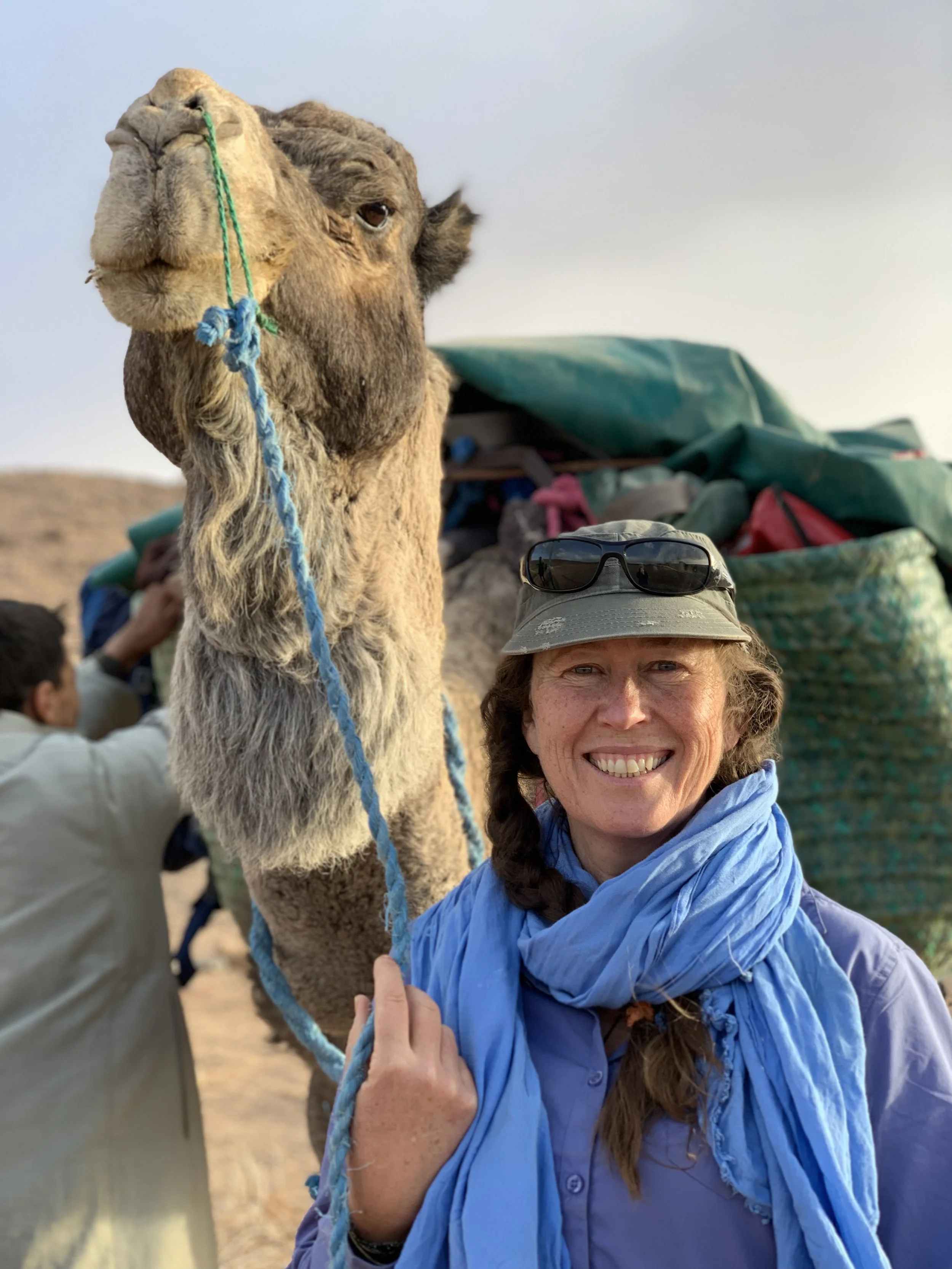
“I have found that getting older has brought me nothing but benefits when it comes to travel. Experience means you can judge situations better and be more open and adventurous. Also I get treated better and with more respect while still maintaining all the fun of the journey.
If your gut tells you something, go with it. Always. If you feel someone is following you for example, they are. Leave any situation you are not comfortable in straight away, even if that is uncomfortable or embarrassing. Don’t be afraid to ask the person next to you for help. Many times I have stopped a random person in the street and asked them to walk with me for a way.”
Alice Morrison, Explorer, Writer and Travel Broadcaster
www.alicemorrison.co.uk
“Keep your wits about you. If you’re in a group, stick together. Always trust your gut.”
Elizabeth Kershaw, founder Journee Girl Club and digital nomad.
“All the travel that I have done has been amazing for my general self-confidence. Whether that’s just being in a new city on your own or doing something a bit more adventurous. You come out of it feeling stronger. I would always encourage women to go travelling.
Sometimes when you’re travelling as a woman, you can be more looked after than you would be if you were a man. That said, there are certain things I wouldn’t do while travelling. I love running, and compared to my partner who would go out for a run wherever we go, I have to think twice if I am on my own or in a new place. I’m also aware that I need a back up. I wouldn’t wander around a new city without my phone. I don’t necessarily like people to know where I am staying when I am abroad on my own.
If was going to give my younger self advice about travelling as a woman, I would say, don’t feel like you need to give details that you’re uncomfortable about. Follow your instincts. You’d be surprised how often you can tell if someone is engaging you for the wrong reasons. Be a bit more streetwise - know how you’d go about reporting something if it happened.
If you feel that bit more prepared, you’ll probably feel safer.”
Holly Tuppen, journalist and podcast host
Your Questions, Answered
-
Many travel risks affect men and women equally, like getting lost, sick or injured.
But our research shows that unwanted attention and harassment are the most common gender-specific challenges, experienced by 23% of women travellers, compared to 15% of men. The data also reveals something important: the biggest impact on women's travel isn't always what happens, it's what women avoid to stay safe. Three in four women avoid walking alone at night, and half avoid exploring destinations after dark.
One specific area of concern is the action we take when we face safety challenges while travelling.
Women are less likely than men to change travel plans or to contact local authorities. They are also less likely to report incidents to their travel provider, accommodation or travel insurance. The main reason? Women tell us it’s because ‘it didn’t feel important enough to report’.
Understanding these patterns helps us plan smarter and identify potential areas of improvement for travel providers.
-
Start with the basics: do your research ahead of time, share your itinerary with someone you trust, arrive at new destinations during daylight when possible, and keep your phone charged with emergency contacts saved. Book accommodation with good reviews from other female travellers, and choose established travel providers where possible.
Most importantly, trust your instincts. If something feels off, it probably is. You'll find detailed safety tips in our Tips for Travelling Safely & Confidently section above.
There’s extra protection baked in when you travel with a tour operator, trusted travel provider or book through a travel agent. They can help with research, sharing pre-trip information and can offer guidance or help if anything happens while you are travelling.
-
Your safety comes first, always. If you feel unsafe, remove yourself from the situation if you can. Once you're safe, you have options: report the incident to your accommodation or tour operator, contact your travel insurance provider, reach out to other travellers for support, or contact local authorities or your embassy for serious situations. For UK travellers who have experienced rape or sexual assault abroad, the Foreign Office has an established process, including how to access medical treatment and legal advice. The Foreign Office also have a dedicated page for Reporting a Crime Abroad.
Don't hesitate to change your plans. It’s not overreacting, it's taking care of yourself. Our research shows women are less likely than men to report incidents, but speaking up helps protect other travellers too.
-
It's more nuanced than people realise. Our research shows that men actually experience more safety incidents overall, like theft, scams, and financial concerns. But the types of risks women face while travelling are different, particularly unwanted attention and harassment (23% of women vs. 15% of men).
Our findings show that women adjust their planning and travel behaviours in ways that men do not think about. For example, women are more likely to avoid walking alone at night, or steer clear of certain neighbourhoods they’ve been warned about. They are more likely to buy suitable travel insurance and plan their flights or trains to arrive during the day. They take more safety precautions before and during trips, perhaps even subconsciously or because they’ve learned from personal or shared experience.
It's not that women are universally "less safe"; they’re navigating a different risk landscape.
-
You should expect clear, proactive communication about safety from travel operators and activity providers. This should go beyond generic warnings and provide specific information about where you’re going, where you’re staying and what you can expect. This could include safety information about your destination, or guidance about local norms and laws. It could be advice about staying safe in and near your accommodation or detailed safety guidance about activities and trip types. They might also provide access to 24/7 support or helplines when you're travelling.
Our research shows that only about half of women are satisfied with the safety information providers currently offer. Look for travel companies that have signed the Safer Tourism Pledge. These operators prioritise traveller safety with clear standards and accountability. They also encourage travellers to report any incidents that may occur and are there to help you if something goes wrong.
-
Start by reading reviews specifically from other solo female travellers. These reviews are more likely to mention things that matter to women's safety and mention how safe the accommodation’s location feels. Look for accommodation with 24-hour front desk service, good lighting in common areas and entrances, and secure locks.
Check the location in advance on a map so you can get a sense of the neighbourhood, how easy it is to access, if it’s in a remote or busy area and if it’s accessible by public transport. You can also ask the property directly about safety. Properties that take women's safety seriously will welcome these questions.
When you’re booking, you can give your first initial, rather than a first name, so people are less likely to guess about your gender. When you check in, have reception write your room number down, rather than saying it out loud so there isn’t any chance that others hear it.
You can also consider booking through a travel agent who should be able to offer guidance about the best accommodation for your individual circumstances.
-
Do plenty of research before you go. Our research shows less than a third of women (32%) research local safety information before travelling. We recommend checking government travel advisories for specific destinations, looking for reviews or content from travellers who have been recently or even connecting with communities of women travellers to ask questions before you go.
If you want to join a group, or would rather travel with a trusted travel company, we would recommend considering providers who have signed the Safer Tourism Pledge.
Be an upstander
If you see another traveller in an uncomfortable or unsafe situation, you have the power to help. Bystander intervention tools are tried and tested techniques developed by safety experts to give people the confidence to intervene safely and effectively.
We like to think of it as helping people to be upstanders, rather than bystanders. Remember, only ever step in if you feel safe doing so.
Distract
This is all about creating a distraction. It can be as simple as asking the person being targeted for the time or directions. Start a conversation about something completely unrelated - you can even pretend you know them. Sometimes breaking the moment is enough to end the unwanted attention. You don’t need to acknowledge the harassment, just shift the dynamic.
Direct
Address the situation directly. But only if it feels safe for you to do so. Speak to the person being harassed: "Are you okay? Do you need help?" You can even name what's happening to the harasser: "I don’t think what you’re doing is ok. This isn’t acceptable behaviour. Leave them alone." Trust your instincts about whether direct intervention feels safe. Your safety matters too.
Delegate
If you don’t feel comfortable getting involved directly, get help from someone with authority or capacity to intervene. This could be staff at a restaurant or hotel, a tour guide, transport personnel or local law enforcement. Sometimes the most effective action is bringing in someone who has more power in that situation. Be specific about what you need: "That person is being harassed and I think they need help."
Document
One of the ways you can be of help is by making a record of what’s happening. You should only do this if it’s safe and if the person being targeted wants you to. Video evidence can be useful for reporting, but you should always prioritise the person’s wishes and dignity. You can document the incident in other ways by making a note of what happened or any identifying details of the harasser.
Delay
Check in after the fact. If the moment has passed or you didn't feel safe intervening at the time, you can still help. Approach the person afterward and ask if they need anything, or if they want company. Even a small gesture—"I saw what happened and I'm sorry that happened to you"—can make someone feel less alone. You can also report it at a later time. It’s never too late to act.
The 5 D's of Bystander Intervention were originally created by the non-profit organisation, Right to Be. You can find out more about the organisation and the intervention tools by visiting their website.
What we’re working towards
She Travels Safe exists to create a world where everyone can explore confidently and safely. Here's what we're working to achieve:
Empower travellers with knowledge
Informed travellers are confident travellers. We spoke to real travellers about their experiences to understand the risk landscape women are navigating. Now we're sharing the guidance and practical tools to make smart decisions and travel on your own terms.Build a supportive community
Travel safety isn't just about individual preparation, it's about looking out for each other. Whether it's a friend, travel companion, or a stranger who needs help, we all have the power to make a difference.Drive industry accountability
We want providers to reflect women’s experience in communicating safety risks and signposting relevant guidance, to continue to encourage reporting and to respond sensitively and promptly when something goes wrong. And finally, to use their influence with suppliers and destinations to seek continued improvement when it comes to keeping women travellers safe.Acknowledge the gap
Women shouldn't have to choose between adventure and safety. By acknowledging the differences between women's and men's travel experiences, we can work to close the gap.
Travel is for everyone. And everyone deserves to feel safe on their journey.